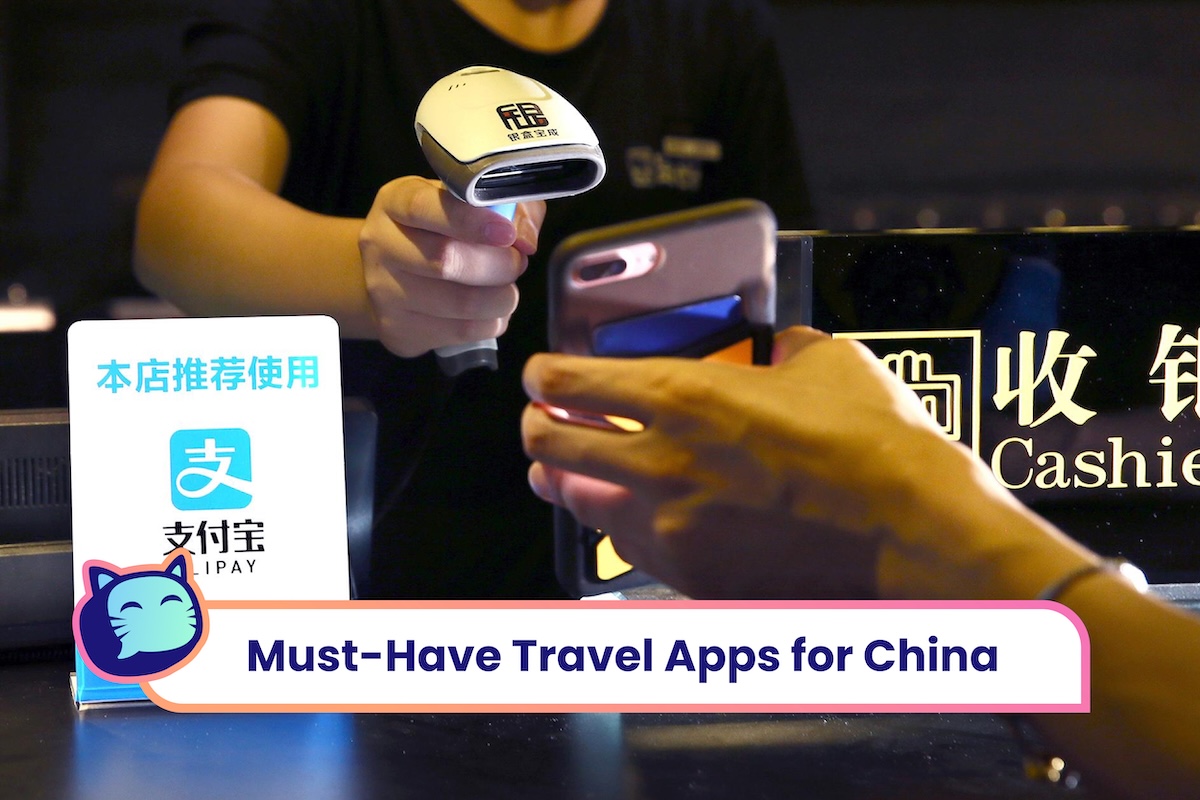
Visiting China-mainland soon? Your smartphone will be your number one essential throughout the whole tip. Not only for photos or messages, but also for payments, navigation, transport bookings, food delivery and communication, all in your palm. Do take note that a lot of familiar apps (Google, Facebook, WhatsApp etc.) either don’t work or are very unreliable there, so preparing the right local apps in advance can make your journey far easier. This guide covers the practical, must-have apps most travellers rely on in China, explained in a clear and straightforward way.
Why These Apps Are Essential for Your China Trip
Digital tools play an essential role in daily life across China. Apps aren't just apps in China, they’re lifelines, from paying for street food to hailing a ride, most day-to-day tasks rely on mobile apps, and the era of “cash only” is rapidly fading.
Because platforms like Google, Facebook and Instagram are restricted, travellers need to rely on local apps for navigation, communication, transport and payments. The app ecosystem operates differently from what many international visitors are used to, so having the right tools in place before you arrive can make a significant difference.
Downloading and setting up key apps in advance helps you avoid common challenges such as difficulties paying, navigating or translating, so you are able to focus on enjoying your trip instead of troubleshooting.
Top Travel Apps You’ll Actually Use in China
- WeChat (Weixin)
- Messaging and staying connected: WeChat lets you make voice calls, video calls, and even share your location, not just pure text. Forget hunting for Wi-Fi just to email someone, WeChat keeps you plugged into everything.
- Wallet / payments: WeChat Pay is everywhere. You can scan QR codes at street food stalls, supermarkets, coffee shops, and even pay utility bills. Many vendors don’t accept cash at all, so having WeChat Pay ready can save you from awkward “I don’t have cash” moments. Here’s an exclusive tip: link your card before you leave home and before you enter China; it makes the first few days much smoother.
- Mini-programs: These are like tiny apps inside WeChat itself. Want to book a taxi, order lunch, or even buy a train ticket? You don’t need to download separate apps, the mini-programs do it all. It’s easy, quick, and keeps your phone uncluttered.
- Alipay (with Didi Chuxing ride-hailing integration)
- Payments everywhere: Alipay is accepted almost everywhere, small food stalls, convenience stores, street markets, and larger shops. Some vendors even prefer Alipay over cash, so having it ready is better. You can scan their QR code or let them scan yours, which feels surprisingly easy once you get the hang of it.
- Tourist-friendly payment options: Don’t have a Chinese bank account? No problem. Alipay’s “Tour Pass” lets foreign visitors link an international Visa or Mastercard, you just top up with a set amount and use it just like a local. You can pay for rides, snacks, groceries, and even small online purchases without the hassle of opening a local bank account.
- Ride-hailing with Didi: Didi Chuxing, China’s version of Uber, is integrated directly into Alipay. You can book rides quickly, see fare estimates, and pay seamlessly, all without juggling cash. It’s especially handy when taxis are scarce or you’re rushing to catch a train.
- Amap (Gaode Maps) or Baidu Maps
- Amap (Gaode Maps): This software is particularly well-liked by international tourists since it allows for both English and Pinyin search, which makes it much simpler to locate stations, streets, or monuments without being familiar with Chinese characters. You can view bus and subway lines, check real-time transit schedules, and even download offline maps for the locations you're visiting, its perfect if your cell data is pricey or inconsistent.
- Baidu Maps: A good substitute, Baidu Maps offers incredibly comprehensive walking routes and hyper-local transit directions. The amount of information can be unparalleled, especially for city streets, tiny neighbourhoods, and micro transport stops, even though the interface is primarily in Chinese. Even if you are unable to read every character, it can still function flawlessly if you use a translation tool or some recognisable iconography.
- Trip.com (or 12306 for trains)
- Trip.com: The app that most international travellers use is Trip.com. It allows you to book hotels, buses, high-speed trains, and flights all in one location and has a completely English interface. Without struggling with Chinese characters, you may view schedules, compare costs, and even select your train seat. When organising last-minute or multi-city travel, it's truly invaluable.
- 12306: This is the official high-speed train ticketing app in China. The interface is dependable and straightforward, even though it is primarily in Chinese and may be challenging for non-Mandarin speakers. 12306 is crucial if you want the official tickets or the quickest information for trains that are sold out. It is strongly advised to have Trip.com as a backup for language assistance, translation, and a more seamless payment process.
- VPN App (e.g., ExpressVPN, NordVPN, Surfshark)
- Important: Many VPN websites and app stores may be restricted once you enter China, so download and set it up before you leave.
- Expert advice: Select a dependable, premium VPN (free ones frequently don't work), log in once at home, check the connection, and then take it with you. Before you leave your house, make sure your VPN app is up to date and log in once. Keep the login information in a safe place. In this manner, you won't waste valuable travel time looking for workarounds and your phone will be operational as soon as you land.
- Translation Tools (Google Translate or Pleco)
- Pleco: Loved by travellers, Pleco is more than simply a dictionary. It offers text-recognition (OCR) so you can point your camera at a sign or menu and get instant translations. It also has handwriting input, letting you draw characters if you don’t know how to type them. For reading restaurant menus, street signs, or transit instructions, it’s incredibly handy. You can even save words and phrases for repeated use, making it easier to navigate independently.
- Google Translate: Also very helpful, particularly for conversational translation or short phrases. When placing an order or requesting directions, its live camera translation and text input can save you time. Just keep in mind that because Google services are limited in China, you will want a VPN or mobile data to enjoy the full functionality.
- Dianping or Meituan (for food & lifestyle browsing)
- Dianping: Consider it as China's "Yelp" or "TripAdvisor," but with a lot more consideration for regional preferences. Restaurant reviews, actual images, ratings, and price, area, and cuisine filters are all available. Dianping leads you directly to a mid-range restaurant with great dumplings or a small noodle business hidden down an alley.
- Meituan: With food delivery, lifestyle services, and merchant ratings all in one location, Meituan adds a layer of convenience to Dianping. Through the app, you can discover offers, order food directly to your hotel, and even look into services like massages, haircuts, and entertainment.
- TUGUGU (AI audio tour guide)
- eSIM Apps (like Nomad)
- Pre-order and activate on arrival: The majority of eSIM companies, such as Nomad, allow you to purchase a plan in advance and have it activated immediately as soon as you land in China. No need to present a Chinese ID, no searching for stores, and no fumbling for local SIM cards. This makes travelling between nations or places easy and seamless, especially for travel throughout Asia.
- Instant access to essential apps: Your WeChat, Alipay, translation tools, and navigation apps all function instantly once you have an eSIM. You can book rides, check instructions, or message your hotel as soon as you land because you don't have to squander the first few hours of your trip trying to get online.
- Backup options: Although eSIMs are dependable, it's a good idea to have a backup, such as a traditional SIM card or hotel WiFi, in case something goes wrong with your phone. To make sure the installation functions perfectly when you get there, test it beforehand.
Wechat is the most common app being used in China, it acts like a proper Swiss Army knife, including messaging, payments, QR codes, mini‑programs, locals literally can’t live without it. Think of WeChat as the backbone of daily life in China. From chatting with friends to paying for your morning dumplings, it’s the app that keeps everything moving.
Pro tip: Set it up before you head to China, use your own regular number, link your card if possible, explore the wallet tab so it’s less foreign when you land. It is to secure your smoothest and hassle-free travel experience.
Taps in where WeChat leaves off: payments, rides, quick purchases, Alipay is often faster, more convenient, and sometimes even cheaper than cash. While WeChat is the all-in-one lifeline, Alipay is its powerful sidekick, covering anything you might still need: from paying a street snack vendor to hailing a cab across town. No worries, Alipay is able to link to WeChat for all your cashless payment.
Pro tip: Link your foreign Visa/Mastercard in advance (or set up Tour Pass) so you’re ready to tap and go when you arrive, always be prepared.
Google Maps is hardly functional in China, so forget about it. Rather, a local map program will be your lifeline for navigating, and the two best choices are Amap and Baidu Maps. These applications do more than simply provide instructions; they can also help you identify local eateries or activities, arrange your transportation, and estimate trip times.
Pro tip: To ensure that you are prepared even in the event of inconsistent data, download the map of the city (or places) you plan to visit in advance.
With nearly no Mandarin required, these language shortcuts for hotel reservations, train tickets, and flights keep you organised. Booking flights, high-speed trains, or even just a hotel can be intimidating when travelling in China, but Trip.com and 12306 make it much easier.
Pro tip: We suggest you book ahead, especially for high-speed rail, then transfer tickets (sometimes via QR) once in the country.
A VPN is practically necessary for anyone visiting China in order to access Gmail, Instagram, and other popular websites. In mainland China, a lot of the programs and websites that we take for granted like Gmail, WhatsApp, Google Maps, Instagram, and Facebook, these are either forbidden or severely restricted. You may lose access to social media updates, frequent contact, and even basic research if you don't have a VPN.
In China's mainland, a lot of foreign services are restricted or forbidden.
Reliable assistance in real time translation tools are invaluable in China when street signs or menus are entirely written in Chinese characters. It can be intimidating to see new characters on a street sign, menu, or train itinerary, even if you have studied some Mandarin. It's a lot easier to explore when you have the correct software.
Pro tip: To avoid depending entirely on real-time data, download an offline Chinese language pack in advance.
Reviews and delivery services geared towards foodies are ideal if you want the local flavour without having to guess. Looking for something genuine when strolling around a Chinese city? These apps are your closest friends when it comes to food; they help you find the tastiest snacks, tidbits, and hidden treasures that you might otherwise overlook.
Pro tip: You can choose whatever you like using the photo reviews, star ratings, and map location, even if you don't speak Chinese well.
A selfie-friendly storytelling app with smooth navigation, audio tours, and face-swap souvenirs for acceptable selfies: Discovering towns and attractions is much more enjoyable with TUGUGU. You receive guided, context-rich narratives about the locations you're visiting while retaining your independence, as opposed to simply meandering aimlessly.
Particularly helpful if you want a self-paced tour with narration or are seeing historical places.
Pro tip: Use it when you want to delve further into a neighbourhood, destination, or cultural monument and want to take a break from "just walking."
eSIM apps are a sleek, contemporary substitute for SIM cards that keeps you connected without the lines, paperwork, or local ID requirements. In China, connectivity is crucial since ride-hailing, payment apps, mapping, and translations all rely on sufficient mobile bandwidth. An eSIM makes your travel easier and less stressful by guaranteeing you have dependable internet as soon as you land.
Pro tip: Secure your eSIM ahead of time; test the install if possible; carry a backup (e.g., physical SIM or hotel Wi-Fi) just in case.
How to Use These Apps Like a Pro Traveler
- Set them up before you leave: Many apps require phone number verification or linking a card, which may get complicated inside China.
- Use QR codes for payments: QR-code scan is the norm. Instead of pulling out cash or cards, you’ll often scan the merchant’s code (or show yours).
- Download offline maps or language packs: For Amap/Baidu/translation apps, offline mode means you’re less stressed if data is slow.
- Keep a small bit of cash: While mobile payments dominate, there may be very small vendors or rural areas where you’ll need cash.
- Carry backup methods: A second bank card, backup payment method, offline map print-out may be helpful if something glitches.
- Check permissions & security: Keep your device safe, turn on 2FA if it's available, and keep an eye on transaction alerts, especially when using payment apps.
- Test once: Make a small purchase or scan a code in your own city (if possible) or at your hotel before setting out. That way you know how it works.
FAQs About Using Apps in China
- Will I need a VPN?
- How to pay if I don’t have a Chinese bank account?
- Do these apps have English versions?
- What if I hit app glitches or registrations fail?
Yes, it's for you to access Western services like Gmail, WhatsApp, Facebook, Instagram, Google Maps.
You can still use apps like Alipay (via Tour Pass or linking foreign cards) or WeChat (which offers some functionality for foreign cards) to pay.
Some do. Amap is increasingly traveller-friendly with English search and menu options. For others, you will mostly see Chinese interfaces, but no worries, you might still be able to recognise the function by their iconography + photos + prior practice helps.
Therefore, we always suggest you register ahead, link the cards needed, and test a small and quick pay-action to see if it works. You may have prior experience of their customer services or supporting action If something fails.
Final Thoughts
Although the app-centric lifestyle in China may seem a bit daunting, you only need to have the appropriate apps installed and familiarised before you arrive. Once you understand the fundamentals of payments, maps, translation, and connectivity, you'll be able to navigate logins, payments, and directions with much greater assurance.
If you enjoy practical travel guides like this, you can also check out Newtopedia, a consumer-focused platform offering clear, first-hand insights to help you make smarter day-to-day decisions. We offer content from dining and entertainment to the products and services you rely on.
Pro tip: To ensure you're comfortable when you get there, choose two or three of these apps and test them out in your hometown (contact someone, scan a QR code, schedule a simulated ride).